
"species growth"
3000 article(s) found

Coffee knowledge the growth trainee of coffee trees
Coffee trees belong to the evergreen family of Akanaceae. They are tropical plants that are not cold. Most of them are planted in areas with elevations of 300,400m, and also in highlands with elevations of 2000-2500 meters. But those who plant on slopes above 1500 meters above sea level have better quality. Coffee trees are most suitable for growth when the average temperature is about 20 degrees Celsius, the annual precipitation is 1500-2000 mm, and the soil is permeable.
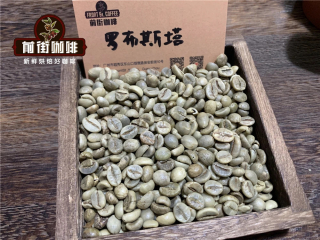
A brief introduction to the description of the flavor, taste and aroma characteristics of robusta coffee beans why the harm of robusta beans is notorious
Its flavor is so bright and strong, but if you want to taste it directly, you have to be prepared. In general, robusta coffee is used in instant coffee (which extracts about twice as much liquid as Arabica), canned coffee, liquid coffee and other industrial coffees. The content of caffeine is much higher than that of A.

A brief introduction to the planting market price of excellent tin card boutique coffee bean varieties
Bourbon: this variety is derived from the iron pickup and was expanded by the French in 1708 on the island of Bourbon (now known as Reunion). Bobang also has a beautiful aroma and rich taste, higher yield and growth than iron pickup, suitable for planting in an area of 12002000 meters, but less resistant to diseases and pests, and more sensitive to strong winds and heavy precipitation. Wave

Variety types in the growth process of coffee trees
Native to Brazil, it is another hybrid tree species; somewhere between CATURRA and MUDO NOVO. The tree is usually low in shape, but slightly taller than CATURRA and easy to harvest, and the coffee fruit begins to bear fruit in late summer. It has more sour taste, and good sour taste makes you secrete salivary acid like lemon and orange, which is usually produced at high altitude and high density.

Comparison of the stories of Coffee Bean Variety producing areas in the World the flavor and taste characteristics of Blue Mountain Coffee in Colombia, Brazil
Coffee beans are the seeds of coffee fruit that are processed, roasted, ground and brewed by the barista before they become the coffee we drink. Just like drinking wine, you are drinking the grapes used in making wine, in the same way, when you drink coffee, what you are drinking is the taste of coffee beans. Both

A brief introduction to the Origin, Development, History and Culture of Iron Card Fine Coffee beans with slightly fruity Flavor
Small grain coffee is suitable for growing in the mountains at an altitude of 8001800 meters. If the altitude is too high, it will taste sour, and if it is too low, it will taste bitter. Small grains of coffee are mostly planted in dry and hot valleys about 1100 meters above sea level, so they are moderately sour, rich and mellow. There is a unique environment suitable for the growth of small seed coffee in many areas of Yunnan, and the quality of small seed coffee is excellent. The planting area is mainly distributed in the

Boutique Coffee Science about the growth zone of coffee beans
Coffee beans grow in tropical or subtropical agricultural gardens around the equator, called coffee belts, and travel to Japan with ships. When the brown coffee beans appear in front of your eyes, they have actually gone through a variety of different circulation processes and the hands of many people. Coffee is widely distributed in South America, Central America, the West Indies, Asia, Africa, Arabia, the South Pacific and

Introduction of cultivation and species of Coffee Tree
Cultivation techniques require that the origin of coffee trees [4] is in Ethiopia in Africa. In botany, coffee trees belong to the evergreen trees of the subgenus Rubiaceae, and coffee beans, commonly known as coffee beans, are actually the seeds of the fruit of coffee trees. They are called coffee beans only because they are shaped like beans. Climate is the decisive factor for coffee cultivation, and coffee trees are only suitable for growing in the tropics or subheat.
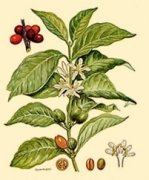
There are about 60 species of coffee plants in the world.
There are about 60 species of coffee in the world, of which only 25 species are cultivated to make coffee, of which only 4 species are used as commercial coffee: large fruit coffee (Coffea liberica), medium fruit coffee (Coffea canephora), small fruit coffee (Coffea arabica) and high yield coffee (Coffea dewevrei). These are botanical names. Coffee in the world at present
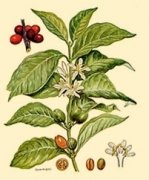
Coffee beans. There are about 60 species of coffee plants in the world.
There are about 60 species of coffee in the world, of which only 25 species are cultivated to make coffee, of which only 4 species are used as commercial coffee: large fruit coffee (Coffea liberica), medium fruit coffee (Coffea canephora), small fruit coffee (Coffea arabica) and high yield coffee (Coffea dewevrei). These are botanical names. Coffee in the world at present
What are Brazilian coffee brands? What is the best Brazilian coffee brand pilao?
Professional coffee knowledge exchange More coffee bean information Please pay attention to coffee workshop (Weixin Official Accounts cafe_style) to learn more about Brazil, the world's largest coffee producing country. Brazilian coffee bean grade coffee bean is the seed of coffee fruit. After factory treatment, roasting, coffee grinder grinding and brewing, it will finally become the coffee we drink. It's like drinking wine, it's like drinking wine
Coffee beans Coffee varieties Yunnan Arabica coffee
Yunnan is China's main coffee producing area. Yunnan is located in the subtropical mountain climate zone south of the Tropic of Cancer, with unique plateau red soil, fertile loose soil, mild climate, especially suitable for planting small coffee species. Yunnan coffee was first introduced by French missionaries in 1902. Up to now, 24 coffee trees with more than 90 years old still grow in Zhukula Township, Binchuan County. 1914 Ruili Jing

Planting Environment and species Morphology of Colombian Coffee
The pure taste of Colombian coffee comes from Colombia's natural environment with the most favorable conditions for coffee growth. But beyond that, it is inseparable from the hard work of local growers. In Colombia, coffee cultivation has reached 1.07 million hectares, there are about 302000 coffee plantations in the country, and 30 to 40 per cent of the rural population depends directly on coffee production. Columby

The types and characteristics of coffee beans what is the relationship between the varieties of Daquan coffee and their origin
Professional coffee knowledge exchange more coffee bean information please follow the coffee workshop (Wechat official account cafe_style) Yunnan coffee bean varieties Typica and Bourbon coffee beans are the seeds of coffee fruit, after the factory processing, roasting, barista grinding, brewing, and finally become the coffee we drink. It's like drinking wine, just drinking wine.

Knowledge of boutique coffee-the growth process of coffee
Looking at this pure black liquid, it took a year of growth, harvesting, production, baking, grinding, extraction, and finally condensed into that mellow taste. Like all the things that have been polished by time and hands, such as red wine, such as jade, there is an infinite world lurking in a small space. Coffee beans would rather be as old as thousands of years ago.
Introduction to high-quality coffee
Introduction of coffee [scientific name] small seed species is Coffea arabica L., medium grain species is Coffea canephora, large seed species is Coffea liberica [alias] small seed species, also known as Arabian species, medium seed species is also known as Ganfla species, large grain species are also known as Liberian species, there are two common species: Arabica and Robusta. Coffea, Rubiaceae (Rubia)
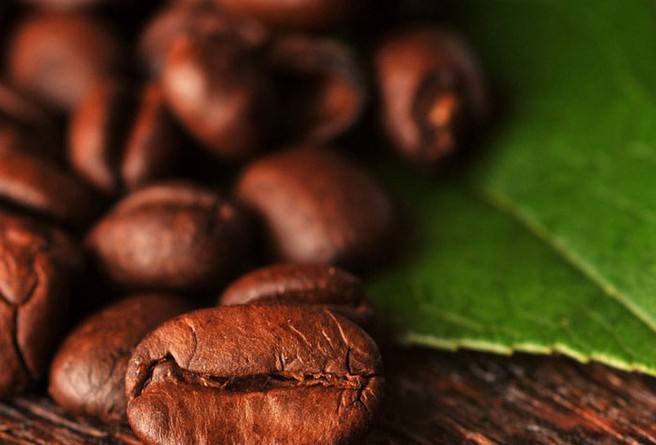
How about Arabica coffee? it's a variety of varieties full of personality.
Arabica species are a variety of varieties full of personality. This kind of coffee accounts for 65% of the world's total coffee production, and most of the coffee beans we buy are Arabica. The Arabica species, which originated in Ethiopia, was divided into Tibika subspecies and Bobang subspecies on the way through the Arabian Peninsula, and later divided into different subspecies through natural variation and different mating methods.

The most classic iron pickup fine coffee beans cultivation geographical location climate altitude profile
Coffee fruits take longer to develop. Coffee arabica fruit ripens in 810 months, usually in December of the year. Rainfall has a great influence on fruit development, and climate conditions directly affect fruit development of Arabica coffee berries. Typica and Bourbon are the two classic high-quality coffee varieties. In 1991, they were re-cultivated.

A little knowledge about coffee trees how coffee trees grow and grow their own coffee trees.
Professional coffee knowledge exchange more coffee bean information Please follow the coffee workshop (Wechat official account cafe_style) there are more than 6000 species of coffee trees, most of which are tropical trees and shrubs. There are four main coffee trees in the world, of which only two are of real commercial value and are planted in large quantities, and the quality of the coffee beans is also better than that of other coffee trees.